
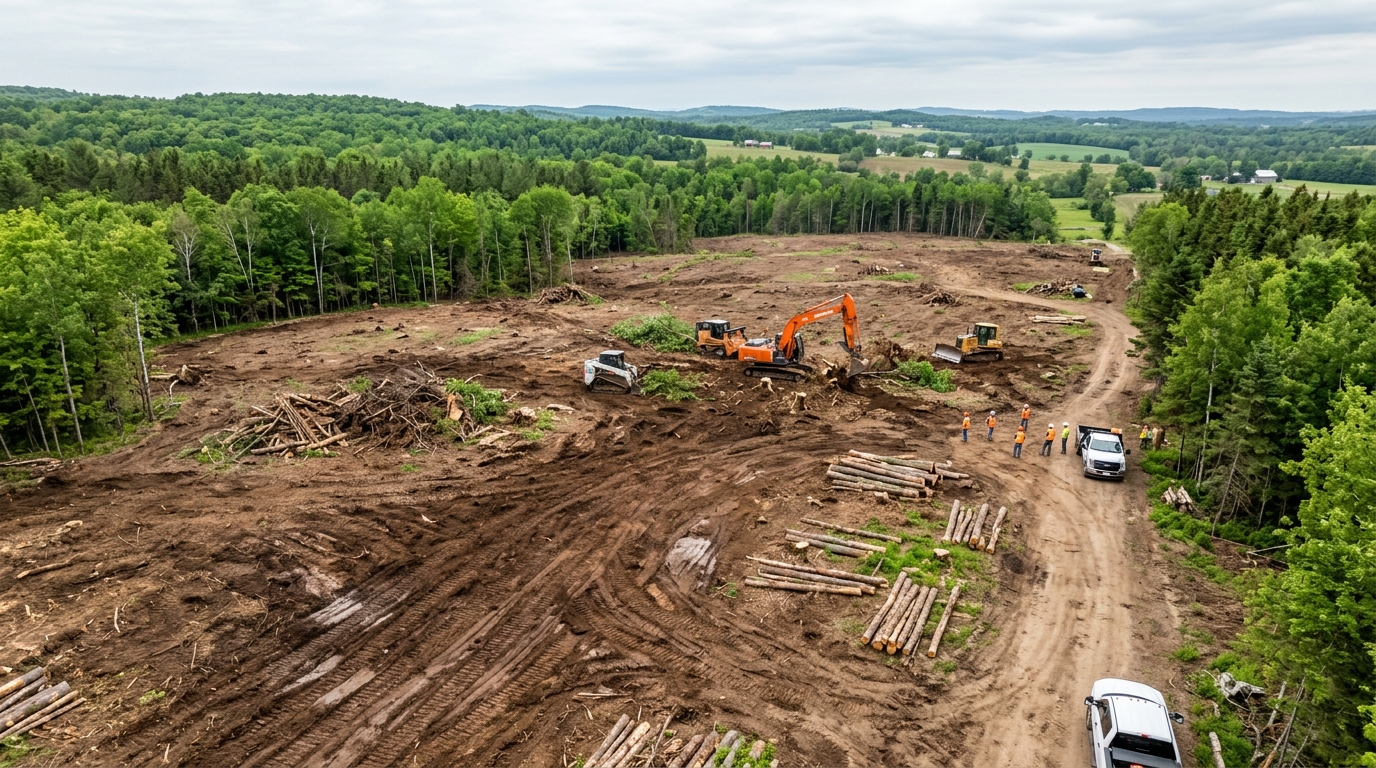
Before a single foundation gets poured, before a frame goes up, before any of the visible construction work even begins, someone has to deal with the land. That’s the part most people don’t fully think through until they’re standing on a wooded lot with a construction timeline and no clear picture of what comes first.
Land clearing for new construction is not just about cutting trees down. It’s about preparing a site correctly so everything that comes after actually works. Done right, it saves you time and money. Done wrong, or skipped over carelessly, it creates problems that compound all the way through the build.
We do this work at J&B Land and Tree Services. Jonny has been in land development and tree work long enough to have seen both outcomes. Here’s what you should actually understand before you start.
Clearing Is Not One Thing
People use the term “land clearing” like it means a single task. It doesn’t. Depending on your property, it might involve tree removal, stump grinding, brush and shrub clearing, grading preparation, debris hauling, and root system management. Every property is different.
A lot with dense mature hardwoods is a completely different job than a lot that’s mostly scrubby growth and small trees. One might take a few days. The other might take a week or more depending on acreage and access. The equipment needs are different. The disposal logistics are different.
When we walk a property before quoting a job, this is what we’re actually assessing. Not just how many trees there are, but what kind, how large, where the stumps will land, whether there are underground obstacles, and what condition we need to leave the site in for the next contractor.
Why Getting It Right Early Matters So Much
Here’s where we see projects run into trouble. A property owner or developer hires the cheapest option to “just clear the trees.” That crew takes the trees down, leaves stumps at ground level, doesn’t account for root systems, and moves on. Then the grading contractor shows up and hits problems. Stumps that weren’t ground low enough interfere with grading equipment. Root masses create voids that affect soil stability. Debris that wasn’t hauled properly becomes an obstacle for the next phase.
Those issues don’t just cost money to fix. They cost time. And on a construction schedule, time is money in a way that’s hard to overstate.
The National Association of Home Builders consistently points to site preparation as one of the most critical phases of any new construction project. Skimping here creates downstream problems that show up in expensive ways.
We’ve walked onto sites after a previous contractor left them in rough shape, and the fix is almost always harder and costlier than doing it right the first time would have been.
Permits and Local Regulations
This is the part nobody wants to deal with, but it matters.
Depending on where your property is located, land clearing may require permits, especially when it involves significant tree removal or work near waterways, wetlands, or protected land. Some municipalities have specific rules about the number or size of trees that can be removed without approval. Others have erosion control requirements that kick in once clearing begins.
We’re not attorneys or permit specialists, and we always recommend confirming requirements with your local planning or zoning office before any clearing work starts. But we’ve done enough land development jobs to know what questions to ask and what to watch for. If you’re working with us on a project, we’ll flag any obvious concerns early in the conversation.
You can also check resources like your state forestry agency for guidance on local tree removal and land clearing rules. It varies more than most people expect.
What to Expect During the Clearing Process
A well-run land clearing job starts with a site walk. We need to see the property, understand the scope, and identify anything that complicates the work: terrain, wet areas, proximity to structures, access limitations.
From there, we sequence the work. Typically that means taking down the larger trees first, then addressing the smaller vegetation, then dealing with stumps and roots based on what the project requires. Debris is managed as we go rather than piled up and left.
Access is often an underestimated factor. If equipment can’t get to part of the property, that changes the approach. We have aerial equipment that handles some access challenges that stop other crews, and we’re experienced at working on lots that aren’t perfectly flat or wide open.
Once clearing is done, we leave the site in the condition agreed upon with you. That might mean bare graded-ready ground, or it might mean leaving some perimeter trees intact as a buffer. We work to match what your construction or development plan actually needs.
You can learn more about how we approach land clearing and development projects on our site.
Timing Your Land Clearing Correctly
Spring and early summer, which is right where we are now, is one of the busier windows for land clearing work. Construction projects that were planned over winter are moving into the ground phase. Demand for site clearing goes up fast.
If you have a build starting later this summer or in the fall, now is the time to get your clearing scheduled. Not next month. Good contractors book out, and the back half of summer can fill up faster than you’d think.
Winter clearing is also an option that more people should consider. Frozen or dry ground is actually easier to work on without tearing up the landscape, and scheduling is typically more flexible.
Talk to Us Before You Assume Anything
Land clearing for new construction is one of those services where a conversation upfront saves a lot of headaches later. Every property is different. Scope varies. What looks simple on a survey can have real complications when you’re standing on the ground.
We’re happy to walk a site and give you a straight assessment of what the job involves. No runaround, no inflated estimates to squeeze margin. Just an honest look at what it takes and what it costs.
Contact J&B Land and Tree Services and let’s talk through what your project needs. The sooner we get eyes on the property, the better prepared your whole build will be from day one.